Showing posts with label muntjac fawn. Show all posts

Tuesday, 22 February 2011

Life in the Garden - 2011

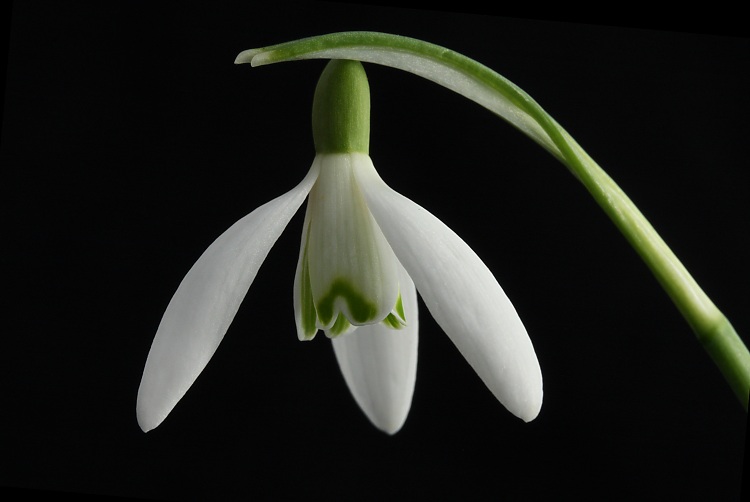
Snowdrop

My photography project for 2010 is finished. I did not realise how much it has taken out of me to continuously record life in the garden for a whole year. I was constantly looking for photo opportunities. For the first few weeks of 2011 I hardly touched my camera but I am gradually getting back into the swing of it again. I hope that I now have time to give this blog the attention it deserves.

My book "A Year in the Life of an English Country Garden" is progressing well. It will contain about 240 photographs of animals, birds, insects, flowers, trees and landscapes all taken in the garden during 2010. I hope to complete it soon.

This winter has not been pleasant - very cold and very grey with little sun to cheer things up. I don't recall such a long spell of very cold weather here in England as we experienced in January. The temperature went down to -11 degrees centigrade and it did not get above freezing at all for several weeks.

However, the first signs of spring are upon us. We have snowdrops, crocuses, primroses and even daffodils flowering already.

And, life goes on for the animals - a little Muntjac kid was born in early January. So far it has not been easy to get a photo. Mum leaves it hidden during the day while she goes foraging. Then at around 4 in the afternoon she comes back to collect it. We regularly see them together before 8 in the morning when it is usually too dark for photographs.

It is most amusing to watch and seems incapable of actually walking - it runs everywhere. It is just a bundle of energy. This is the best photo I have managed so far. About 6 weeks old it still has its spots.
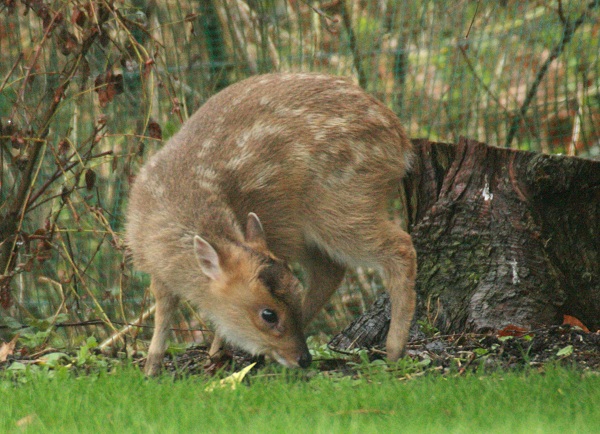
Muntjac Kid

Sunday, 10 January 2010

Watching Me Watching Him

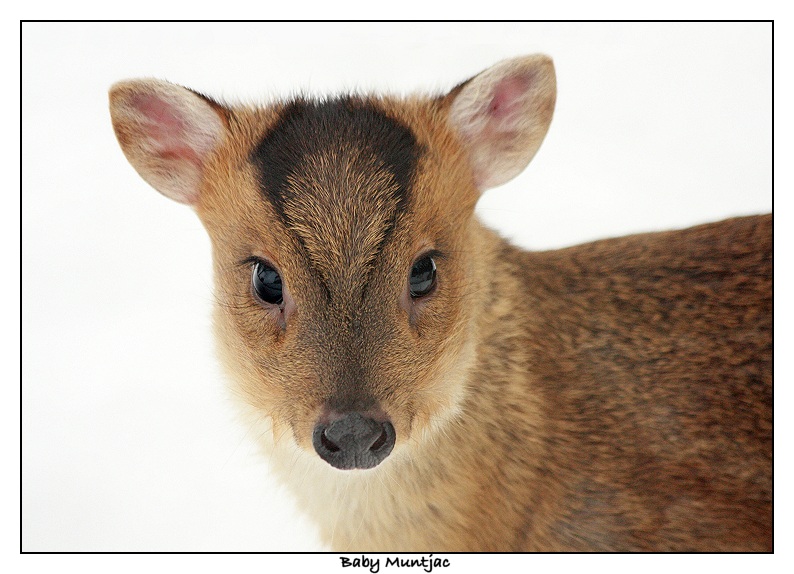
Muntjac fawn - Muntiacus reevesiThere are some benefits to this bad weather. The muntjacs have been hanging round the house again today and it makes for some great photo opportunities.

They were rooting around in the flower beds next to the house and I was watching through the window waiting for them to emerge. The little one froze when he saw me, just long enough for me to take this photo before he ran off.

It has been slightly warmer today. No new snow has fallen, but there are still several inches left on the ground.

Friday, 8 January 2010

Not Yet Weaned!

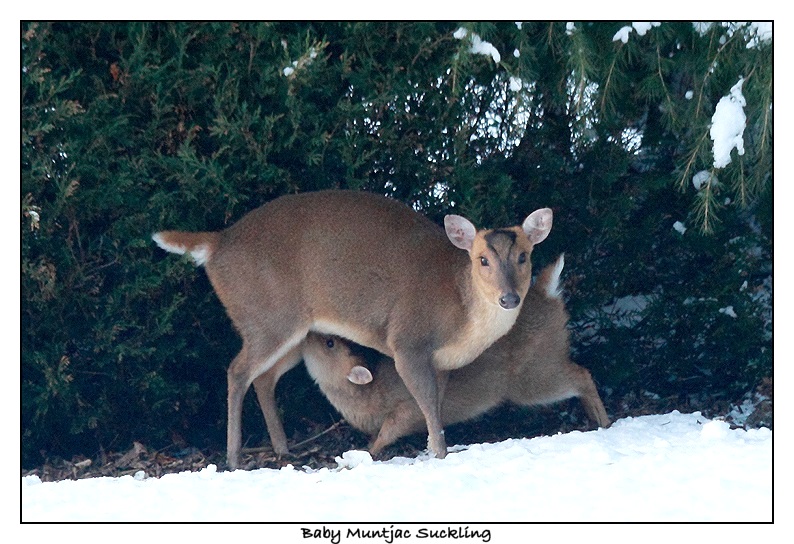
Muntjac mother and fawn - Muntiacus reevesiI mentioned seeing a new baby muntjac deer a couple of weeks ago. Well, I was in for a real treat today. Mother and Junior were both on my back lawn and I was lucky enough to capture a picture of the little one suckling. What a wonderful sight!

Sadly the photo is not these best, but it was late afternoon and starting to get dark.

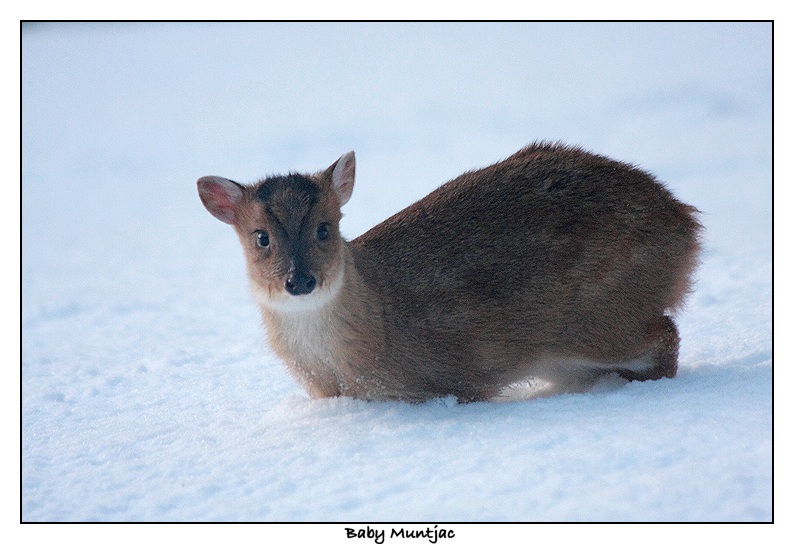
The snow is still deep and it is still very cold, so the fawn must be a tough little thing to survive.

The next picture shows the fawn when it ran across the lawn before disappearing into the flower bed next to the house. It looks as if it is sitting down, but actually the snow is so deep that it was sinking up to the top of its legs. I think it is probably about 8 weeks old and should be weaned very soon.Muntjac fawn in the snow - Muntiacus reevesi

Thursday, 31 December 2009

Goodbye to 2009

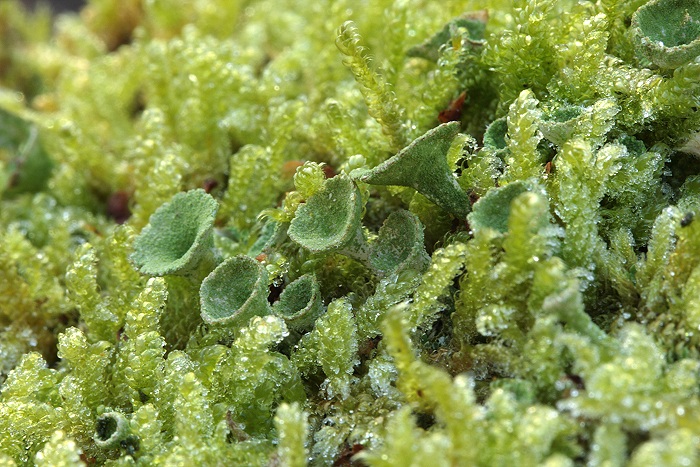
Cup Lichen - Cladonia spThe snow has finally disappeared, but the weather remains cold and miserable. During one of the sunny interludes this week, I had a good look around the garden and noticed that the tree that came down a few weeks ago is covered in lots of mosses and lichens. I don't know much about either, so perhaps one of my tasks for 2010 is to find out more!

This cup lichen nestling among the frosty moss is probably Cladonia sp. I won't hazard as guess as to exactly which one. Lichens are amazing organisms which come in all shapes and sizes and which are very easy to overlook. These cups are tiny, just a few millimetres across.

Also, this week I spotted a new baby muntjac. It was alone without its mother, but I suspect she was somewhere close by. Muntjacs breed all year round and have a gestation period of 7 months. The females usually become pregnant again very quickly after giving birth, so it is possible that this is a sibling of the fawn I mentioned back in May. Sadly, there was no possibility of a photo of it this week. The weather was too dull and overcast.

Here's to a happy and healthy 2010 and hoping for lots of interesting flora and fauna in the new decade!