Thursday, 22 October 2009

Roe Deer Buck

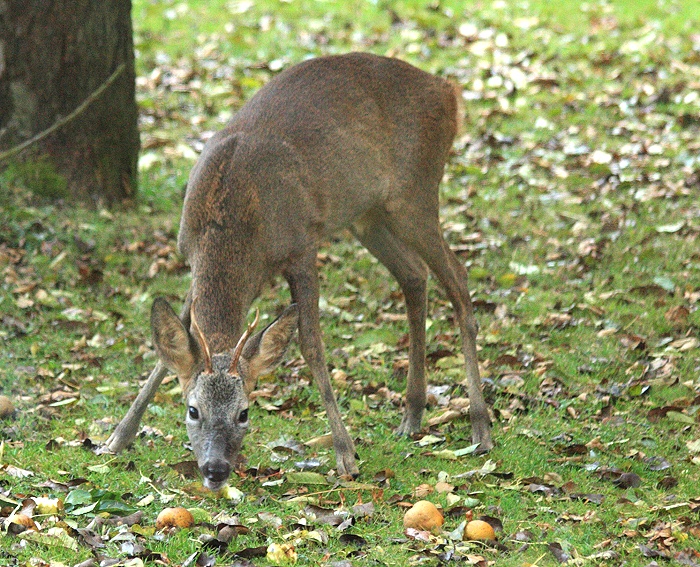
Roe deer buck - Capreolus capreolusThis chap was hanging around our garden all day today. I watched him eating our shrubs as I opened the curtains when I got up this morning (no camera handy).

I got my camera out when he was eating the windfall apples this evening, but it was almost dark, so the photograph is not too good.

You can see the remnants of his ginger summer coat amongst his darker winter coat.

He is also a relatively young male since his antlers are quite small. Roe deer shed their antlers each winter and regrow them.

Sunday, 18 October 2009

Deer, Squirrels and Pheasants

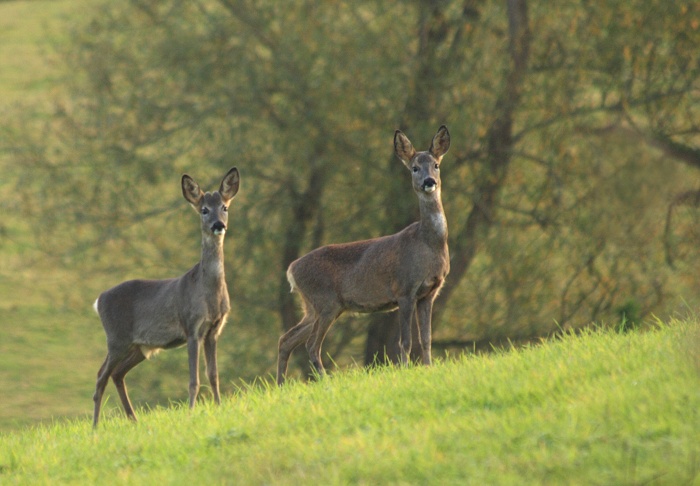
Roe deer - Capreolus capreolusUntil this week we have not seen any deer in or around the garden for ages. I guess they are visiting at night rather than during the day. However, in the last couple of days I have spotted a couple in the field out front. I think these are the mother and the young male born this year. They are both wearing their darker winter coats.

The squirrels are hyperactive at the moment. Every time I look out of the window, I see one running across the lawn, probably with acorns to stash away.

I think there must be people locally who breed pheasants. I suspect that they have just released this year's brood, possibly because the pheasant shooting season in England started on 1st October. In the last two weeks, there have been at least a dozen pheasants in the garden - mostly males. We often hear shooting in the woods, so I hope the pheasants realise they are safe in our garden!

Saturday, 17 October 2009

Feathered Thorn Moth

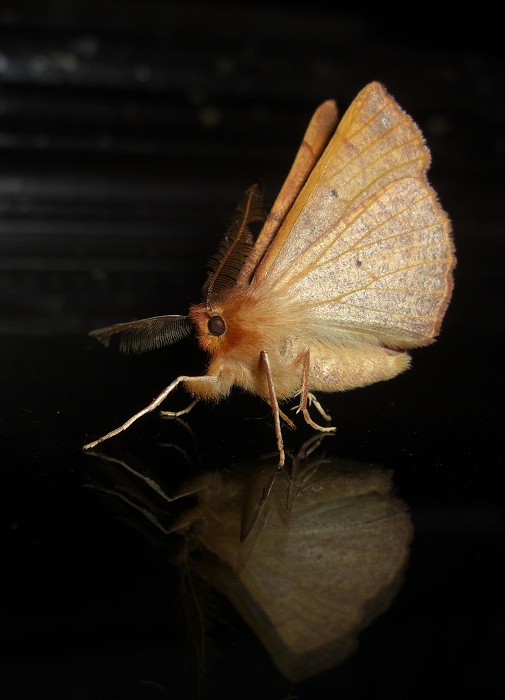
Feathered Thorn Moth - Colotois pennariaThis Feathered Thorn Moth has been on my window for several days. It looks just like a dried leaf sticking to the window, until you look closer.

This one is a male with its long, feathery antenna. They are quite amazing when you see them close up. Click on the image to see a larger version.

Monday, 12 October 2009

Green Woodpecker

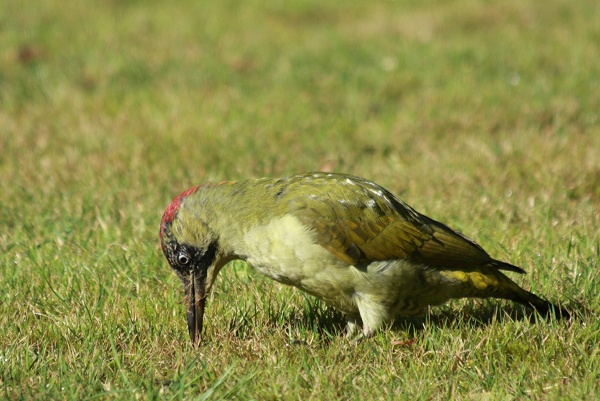
Green Woodpecker - Picus viridusThis female green woodpecker (Picus viridus) was hopping around the lawn for most of the day today, eating ants.


They are very shy and don't often come close enough to the house to get a decent photo through the window.

The beak is very long and it hammers it into the earth to find ants, usually ending up quite muddy in the process.

Unlike other kinds of woodpecker, green woodpeckers spend a lot of time on the ground rather than in trees. Their green plumage merges into the background, but the red head means it can be spotted quite easily.

At the weekend there were dozens of ladybirds flying around. I would guess that they are trying to find a warm and cosy place to hibernate. Last winter, lots of them ended up in the frame of our sliding patio doors.

Friday, 9 October 2009

Badger and Hare

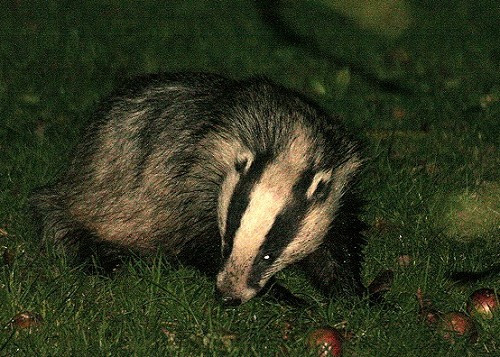
Badger - Meles melesI found a dead badger (meles meles) in the garden today - not the one in the photograph. It must have been dead for a while because the scavengers had been at it and there was only fur and a few bones left. I would be interested to know what killed it.

Badgers have few predators in this country and it is badger cubs that are most at risk from predators. Adult badgers can fight back fairly aggressively if attacked and they have a nasty bite. They also use their black and white striped face to warn off attackers.

Badgers are getting a fairly bad press at the moment in the UK, accused of spreading Bovine TB. I hope that no local farmers are taking it into their own hands and poisoning them. They are such beautiful creatures.

I also surprised a brown hare (Lepus capensis). It was just a few metres away so I got a good look at it before it ran off. I have seen hares in the garden before but only from a distance. I was surprised by its light colouring and, of course, it had the black tips on its ears. I wish I could get a photo.

Thursday, 1 October 2009

Gardener's Enemy

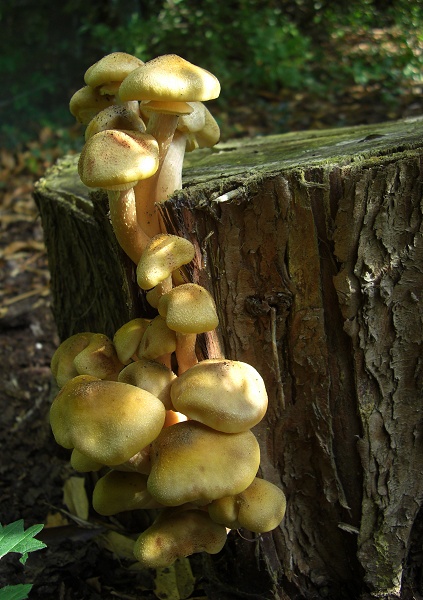
Honey Fungus - Armillaria melleaIt only took a sprinkle of rain and up popped clumps of Honey Fungus (Armillaria mellea) all over the garden.

In woodland, this fungus serves the very useful purpose of breaking down the wood of dead trees and making space for new trees to take their place. However, in gardens, the fungus can spread to healthy trees and shrubs and kill them.


We get Honey Fungus in the garden most years but have not as yet had it spreading to healthy trees. I am not really sure what, if anything we should do about it. There is no easy way of getting rid of it.

Saturday, 26 September 2009

Glorious Autumn Weather

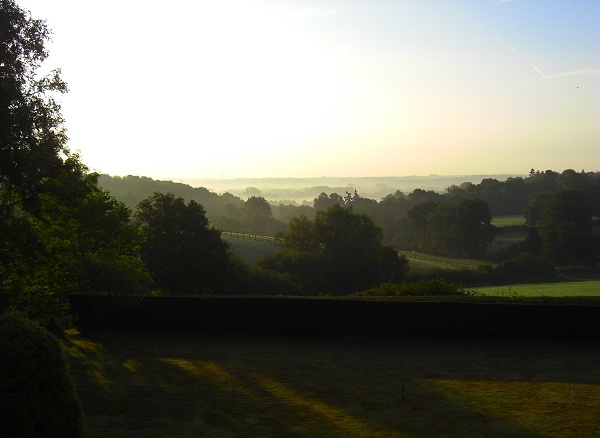
Golden SunriseI don't want to speak too soon, but after a mixed summer this autumn has started beautifully - bright blue skies with a few fluffy clouds and glorious golden sunrises.

The leaves started changing colour in August, but very few have fallen. If we don't get any high winds, I think this will be a very colourful autumn.

Golden Sunrise
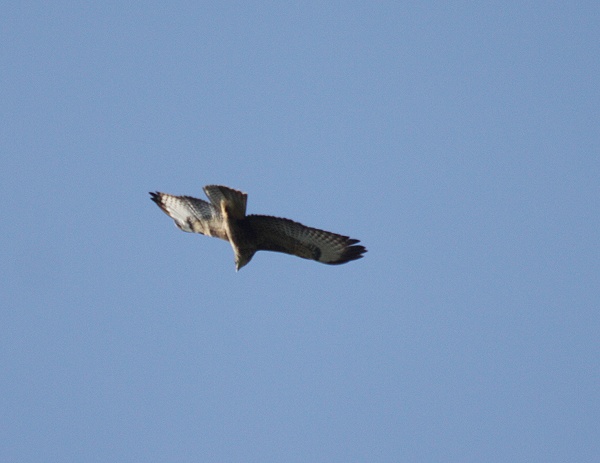
Today was sunny and warm and the creatures in the garden were making the most of it. Two buzzards were soaring over the house and butterflies (Comma and Speckled Wood) and dragonflies were enjoying the sunshine.